
Home > What We Build > Power Generation Facilities
Power Generation Facilities
Steel buildings engineered for the demanding environments of power plants and generating stations. Gonzales Construction delivers turnkey design-build control rooms, monitoring facilities, maintenance shops, and administrative buildings for power generation clients. With $8.9M+ in completed LADWP generating station projects delivered alongside the nation’s top EPC contractors, we bring proven experience to every power generation building program.
- LADWP Experience
- EPC Partnerships
- Crane Integration
Or call 818-758-2490
Since 1960
Decades of construction expertise serving California’s power generation industry
$8.9M+
Completed power generation building projects for LADWP generating stations
3 Stations
LADWP generating stations served with repeat project delivery
25-30%
Faster construction compared to conventional methods, minimizing plant disruption
Steel Buildings Engineered for Power Generation
Power plants and generating stations operate in demanding environments where building performance directly impacts operational reliability. Whether you are constructing new support facilities for a repowering project, expanding an existing plant, or replacing aging structures, our pre-engineered building systems deliver the durability, fire resistance, and specialized features that power generation environments require. We work as your prime design-build contractor or as a specialty subcontractor to EPC general contractors, adapting to your project’s delivery model.
Why Steel for Power Generation Facilities
Fire Resistance and Safety
Non-combustible steel frames meet the stringent safety requirements of active power plant environments, protecting critical monitoring equipment and personnel. Fire-rated shaft walls, fire-rated windows, and separation barriers can be integrated to isolate control areas from maintenance and storage spaces.
Clear-Span Crane Capability
Column-free interiors accommodate bridge cranes up to 15 tons, monorail systems, and the heavy equipment access essential to plant maintenance operations. Engineered foundations and structural framing support crane runway systems without compromising building flexibility.
Accelerated Construction
Pre-engineered components reduce construction timelines by 25 to 30 percent compared to conventional methods, minimizing disruption to active generating station operations and repowering schedules. Factory fabrication proceeds simultaneously with site preparation, compressing the overall project duration.
Modular Expandability
Connect new buildings to existing plant structures or add bays as operational needs evolve, all without interrupting power generation. At LADWP’s Haynes Generating Station, we joined a new control building to an existing facility we originally constructed in 2003 using fire-rated connections.
Power Generation Facility Types
Our power generation building expertise spans the full range of support structures that keep generating stations operational. Each facility type is engineered for the specific demands of power plant environments, from precision-controlled monitoring rooms to heavy-duty maintenance shops.
Control Rooms and Monitoring Facilities
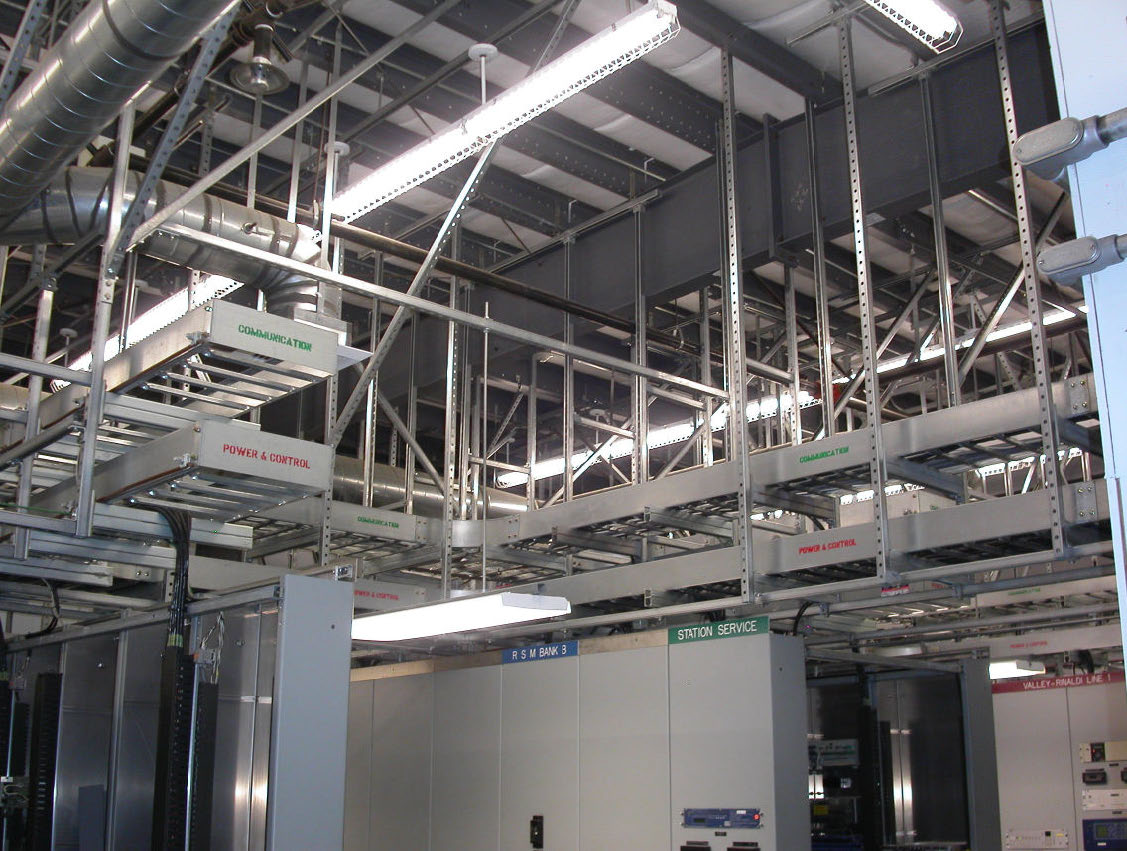
Purpose-built environments housing distributed control systems (DCS), yard relay rooms, and real-time plant monitoring equipment. These facilities require precision HVAC for equipment heat loads, raised access flooring for cable management and cooling distribution, and clean agent fire suppression to protect sensitive electronics without risk of water damage.
KEY FEATURES
- Raised access flooring for DCS and control areas
- FM-200 or clean agent fire suppression systems
- Precision HVAC for equipment cooling
Maintenance Shops and Instrument Buildings
Clear-span work environments equipped for plant maintenance, instrument calibration, and equipment repair. These buildings integrate bridge cranes up to 15 tons, monorail crane systems, and specialized electrical and instrument shop layouts with dedicated supervisor offices, training rooms, and reference libraries.
KEY FEATURES
- Bridge cranes up to 15 tons, monorail systems
- Instrument shop and electrical shop layouts
- Dedicated training and reference areas
Administrative and Support Buildings
Comfortable, code-compliant office environments adjacent to plant operations. These facilities house management offices, conference rooms, break rooms, locker rooms, and training facilities for plant personnel. Interior buildouts include full tenant improvements with drywall, acoustical ceilings, flooring, and complete MEP systems.
KEY FEATURES
- Full interior tenant improvements
- Locker rooms and break facilities
- Conference and training spaces
Equipment Storage and Warehouse
Weather-tight, crane-served storage buildings protecting spare parts, tools, and materials critical to plant operations. High bay clearance, oversized roll-up doors, and overhead cranes enable efficient receiving, storage, and deployment of heavy equipment and replacement components.
KEY FEATURES
- Overhead crane integration
- High bay clearance with roll-up doors
- Secure, weather-tight storage
Combined-Use Facilities
Integrated facilities combining control, administration, and maintenance functions under one roof. This approach reduces site footprint, streamlines coordination between plant operations teams, and simplifies utility connections. Fire-rated separations between building zones maintain required safety isolations while enabling efficient adjacencies.
KEY FEATURES
- Fire-rated zone separations
- Multi-function layouts under one roof
- Reduced site footprint and utility connections
Power Generation Design Features
Successful power generation buildings balance structural performance with the specialized systems and safety requirements of active plant environments. Our engineering team integrates these features into designs that meet the operational demands of generating station construction.
Fire-Rated Construction
Fire-rated shaft walls, fire-rated windows, and separation barriers isolate sensitive control areas from maintenance and storage spaces. These systems meet power plant safety codes and enable buildings to be connected to existing plant structures while maintaining required fire separations.
Crane Systems Integration
Structural framing and foundations engineered for bridge cranes up to 15 tons, 5-ton monorail cranes, and associated runway systems. Crane integration is coordinated during the design phase to ensure structural members, connections, and clearances accommodate equipment loads and operational requirements.
Raised Access Flooring
DCS rooms and control monitoring areas incorporate raised floor systems for organized cable management, underfloor cooling distribution, and equipment flexibility. This design allows reconfiguration of monitoring and control equipment without structural modifications.
Clean Agent Fire Suppression
FM-200 or equivalent clean agent fire suppression systems protect sensitive electronic monitoring and control equipment without the risk of water damage. These systems are essential for DCS rooms, server areas, and electrical control panels in power generation environments.
Precision HVAC Systems
Climate control systems sized for the specific heat loads of monitoring equipment, server rooms, and electrical control panels. Gas and electric air handlers, alarm thermostats for remote temperature monitoring, and redundant systems ensure critical equipment operates within required temperature ranges.
Existing Structure Coordination
New buildings can be designed to connect to existing plant infrastructure, sharing utilities and maintaining operational adjacencies. Our experience at the Haynes Generating Station demonstrated this capability, where a new control building was joined to a facility we originally built in 2003 using fire-rated shaft walls with fire-rated windows.
Our Design-Build Process
From initial feasibility through facility commissioning, we manage every phase of your power generation building project. Whether serving as your prime contractor or as a specialty subcontractor to an EPC firm, we adapt to your project’s delivery model.
Needs Assessment and Feasibility
We analyze your operational requirements, site conditions, plant layout constraints, and budget parameters to develop preliminary building programs. For subcontractor roles, we coordinate directly with the EPC team to align scope, schedule, and safety protocols.
Preliminary Design and Budgeting
Using TALON estimating software, we develop preliminary designs with accurate cost projections. This phase balances your facility requirements with budget realities and identifies value engineering opportunities before commitments are made.
Engineering and Documentation
Our engineering team develops complete construction documents custom engineered by registered professional engineers. Structural calculations address crane loads, seismic requirements, fire-rated construction, and the specific demands of power generation environments.
Permitting Support
Our team personally walks plans through the Building Department plan check process, addressing comments and coordinating with utility authorities to expedite approvals. Our experience with public works and utility projects streamlines this phase.
Manufacturing Coordination
We coordinate with American Buildings Company to ensure components are fabricated to specification and scheduled for delivery aligned with your construction sequence and plant outage windows.
Construction
Our experienced crews erect structural steel, wall and roof panels, and install doors and accessories while maintaining the strict safety standards required in generating station environments. We coordinate with electrical, mechanical, plumbing, and fire suppression trades for a complete facility delivery.
Project Closeout
We complete all punch list items, compile operation and maintenance documentation, and ensure proper warranty registration. Your facility is delivered ready for equipment installation and commissioning with all documentation organized for your records.
Frequently Asked Questions
Common questions about steel buildings for power generation facilities, from specialized requirements and construction timelines to fire protection and EPC coordination.
Can steel buildings meet the specialized requirements of power plant environments?
Absolutely. Pre-engineered steel buildings are engineered to accommodate the demanding requirements of power generation facilities, including heavy crane loads, fire-rated separations, raised access flooring for DCS rooms, and precision HVAC systems for sensitive monitoring equipment. Gonzales Construction has delivered all of these features across multiple LADWP generating station projects.
How does Gonzales coordinate with EPC general contractors on power generation projects?
We have extensive experience working as a specialty subcontractor to major EPC firms including Kiewit Power Constructors and Barton Malow Company. We integrate seamlessly into their project management frameworks, adhere to their safety protocols, and coordinate our construction activities with plant outage schedules and other trade contractors to ensure smooth delivery.
What fire protection systems can be integrated into power generation buildings?
We design and install fire-rated shaft walls, fire-rated windows, and separation barriers between building areas. For rooms housing sensitive electronic equipment such as DCS control rooms and monitoring facilities, we integrate FM-200 or equivalent clean agent fire suppression systems that extinguish fires without causing water damage to critical equipment.
How quickly can a power plant support building be designed and constructed?
Pre-engineered metal buildings can typically be designed, fabricated, and erected 25 to 30 percent faster than conventional construction. The exact timeline depends on building size, complexity, crane requirements, and permitting. Our experience in power plant environments means we understand how to sequence construction activities around plant operations and outage windows to keep your project on schedule.
Can Gonzales build additions connected to existing power plant structures?
Yes. At the Haynes Generating Station, we designed and constructed a new Control Monitoring Facility that was joined to an existing control building we originally built in 2003. The connection was made using fire-rated shaft walls with fire-rated windows, demonstrating our ability to expand existing plant infrastructure while maintaining all required fire and safety separations.
Does Gonzales have experience with public utility construction requirements?
Yes. Our LADWP project history demonstrates proven experience with public utility construction, including compliance with prevailing wage requirements, public works regulations, and government contracting procedures. Our SBE and MBE certifications further support public agency diversity and procurement goals.